Materials for Windows: A Comprehensive Guide
Exploring the world of materials for windows unveils a realm filled with possibilities and practical considerations. From the classic charm of wood to the sleek efficiency of aluminum, this guide delves into the nuances of choosing the right materials for your windows.
Delve deeper into the types of materials commonly used, factors to consider when making a selection, installation techniques, and maintenance tips to ensure your windows stand the test of time.
Types of materials for windows
When it comes to choosing materials for windows, there are several options available. Each material has its own set of benefits and considerations to keep in mind.
Wood
- Wood windows are known for their classic and elegant look, adding warmth and charm to any home.
- They offer excellent insulation properties, helping to keep the interior of a home comfortable and energy-efficient.
- However, wood windows require regular maintenance to prevent rotting, warping, or insect damage.
Vinyl
- Vinyl windows are low-maintenance and relatively affordable compared to other materials.
- They are also energy-efficient and provide good insulation, helping to reduce heating and cooling costs.
- However, vinyl windows may not be as durable as other materials and can fade or warp over time.
Aluminum
- Aluminum windows are lightweight and strong, making them a good choice for larger windows or modern designs.
- They are low-maintenance and resistant to corrosion, making them ideal for coastal areas.
- However, aluminum windows are not as energy-efficient as other materials and can conduct heat, leading to potential energy loss.
Fiberglass
- Fiberglass windows are highly durable and resistant to warping, cracking, and fading.
- They offer excellent insulation properties, helping to maintain a comfortable indoor environment.
- While fiberglass windows may be more expensive upfront, they often provide long-term cost savings due to their durability and energy efficiency.
Factors to consider when choosing window materials
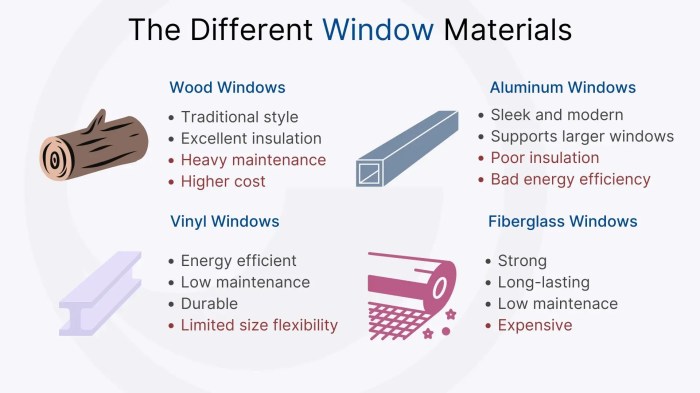
When selecting window materials, several factors need to be taken into consideration to ensure the best fit for your specific needs. These factors include cost, maintenance requirements, aesthetics, and energy efficiency. It is essential to weigh these factors carefully to make an informed decision that aligns with your priorities and budget.
Impact of Different Climates
The climate in which your property is located plays a crucial role in determining the most suitable window materials. For instance, in colder climates, windows with high insulation properties are essential to prevent heat loss and reduce heating costs. On the other hand, in warmer climates, windows with good ventilation and UV protection are more desirable to help maintain a comfortable indoor temperature and protect furnishings from sun damage.
Performance in Noise Reduction and Insulation
When it comes to noise reduction and insulation, specific window materials perform better than others. For example, double or triple-pane windows with insulating gas fillings offer superior noise reduction and thermal insulation properties compared to single-pane windows. Additionally, materials like fiberglass and vinyl are known for their excellent insulation capabilities, helping to keep the indoor temperature consistent and reduce energy costs.
Installation techniques for various window materials

When it comes to installing windows made of different materials such as wood, vinyl, aluminum, and fiberglass, there are specific steps involved in each process. It's important to follow the recommended installation techniques to ensure the windows are properly installed for optimal performance.
Wood Windows
Wood windows require careful handling during installation to prevent damage to the delicate material. The installation process usually involves:
- Ensuring the window frame is properly prepared and leveled.
- Sealing any gaps or cracks to prevent air leaks.
- Applying a high-quality sealant or primer to protect the wood from moisture.
- Using appropriate hardware and fasteners to secure the window in place.
Vinyl Windows
Vinyl windows are known for their durability and low maintenance, making them a popular choice among homeowners. The installation process for vinyl windows often includes:
- Checking the window opening for proper measurements and adjustments.
- Securing the window in place using screws or nails.
- Applying foam insulation around the window frame for energy efficiency.
- Checking for proper alignment and smooth operation of the window.
Aluminum Windows
Aluminum windows are lightweight and resistant to corrosion, making them suitable for various climates. The installation of aluminum windows typically involves:
- Ensuring the window frame is clean and free of debris.
- Using a specialized sealant to prevent water infiltration.
- Securing the window in place with screws or clips.
- Checking for any gaps or leaks and addressing them promptly.
Fiberglass Windows
Fiberglass windows are known for their strength and durability, making them a long-lasting option for homeowners. The installation process for fiberglass windows may include:
- Properly preparing the window opening for a precise fit.
- Using shims to ensure the window is level and plumb.
- Applying a waterproof sealant around the frame to prevent leaks.
- Checking the operation of the window for smooth opening and closing.
Proper sealing and insulation are crucial during window installation to prevent air leaks, water infiltration, and energy loss. By following the specific installation techniques for each window material and ensuring a tight seal, you can improve the energy efficiency and overall performance of your windows.
Maintenance tips for different window materials
When it comes to maintaining windows, different materials require specific care to ensure longevity and optimal performance. Let's explore the maintenance tips for wood, vinyl, aluminum, and fiberglass windows.
Wood Windows
Wood windows add a classic and timeless look to any home, but they require regular maintenance to prevent rotting and warping. Here are some tips:
- Regularly inspect for any signs of moisture or damage.
- Keep the wood clean and free from dust and debris.
- Apply a fresh coat of paint or stain every few years to protect the wood from the elements.
- Seal any cracks or gaps to prevent water infiltration.
Vinyl Windows
Vinyl windows are known for their low maintenance requirements, but proper care can extend their lifespan. Follow these tips:
- Clean the vinyl frames and sashes with a mild detergent and water regularly.
- Avoid using abrasive cleaners that can damage the vinyl surface.
- Inspect the weatherstripping and seals for any wear or damage.
- Check for proper ventilation to prevent condensation buildup.
Aluminum Windows
Aluminum windows are lightweight and durable, but they can be prone to corrosion if not properly maintained. Here's how to care for aluminum windows:
- Clean the aluminum frames with a mixture of water and mild detergent.
- Inspect the window hardware for any loose or damaged parts.
- Apply a silicone lubricant to the moving parts to ensure smooth operation.
- Check for any signs of corrosion and address them promptly.
Fiberglass Windows
Fiberglass windows are known for their strength and energy efficiency, but they still require regular maintenance to stay in top condition. Follow these maintenance tips:
- Clean the fiberglass frames with a non-abrasive cleaner and a soft cloth.
- Inspect the seals and weatherstripping for any gaps or damage.
- Apply a UV protectant to prevent fading and discoloration.
- Check the hardware and locks for proper functioning.
Regular maintenance not only keeps your windows looking great but also ensures their longevity and performance. By following these tips specific to each window material, you can enjoy your windows for years to come.
Closing Summary
In conclusion, understanding the intricacies of window materials empowers homeowners to make informed decisions that enhance both aesthetics and functionality. By selecting the right materials and following proper maintenance practices, your windows can truly shine for years to come.
Quick FAQs
What are the best materials for noise reduction?
Windows made of vinyl or fiberglass are excellent choices for reducing noise pollution due to their sound-insulating properties.
How do different climates affect window materials?
Extreme climates may impact the durability and performance of window materials. For example, wood windows may warp in humid conditions, while aluminum windows can conduct heat in hot climates.
Can I paint my vinyl windows?
While it's possible to paint vinyl windows, it's important to use the right type of paint and follow proper preparation steps to ensure adhesion and longevity.
What is the average lifespan of aluminum windows?
With proper maintenance, aluminum windows can last anywhere from 15 to 30 years, depending on environmental factors and usage.